Preventive health
My Active Age
A Dutch preventive-health clinic whose site sold a number and whose customers wanted a plan, rebuilt as one system: nine investigations rendered from one component, and a portal that changes shape depending on where in the programme you actually are.
- Design system
- Marketing site
- Client portal
- Content architecture
- Role
- Frontend, design system, product direction
- Industry
- Preventive health
- Scope
- Marketing site, client portal, admin portal
- Content
- 9 investigations, 14 health domains, 47 articles
- Duration
- One to two months
The short version
My Active Age, in three parts
The problem
MAA runs a full medical scan in a single morning and a doctor reads the results. The measuring was never the hard part. The site sold a number, and the person buying wanted to know what they were supposed to do on Monday. Everything after the appointment lived in PDFs and phone calls. The site itself was WordPress with a page builder on top, so every new investigation meant somebody rebuilding a page by hand, and every price change meant finding the price in four places.
What I did
I stopped treating the site and the portal as two projects. They are one product with two doors, and the sentence explaining what a result means should be the same whether you read it before you buy or six weeks after. On the marketing side every word came out of the components and went into content files, so nine investigation pages render from one component and one record each and a new investigation is a record rather than a build. On the product side I designed around the phase the person is in rather than around the data model: waiting for results is a different screen from reading them, which is a different screen from working a plan in week five of twenty-six. Two decisions I would defend anywhere: no shadows at all, with hierarchy carried by surface colour, hairlines, radius and space, and the portal built in plain HTML and SCSS so the Django team could take the markup into templates without inheriting a build they did not want.
What shipped
A Next.js marketing site with 25 page-content files, nine investigation records, 14 structured health domains and 47 articles, podcasts and customer stories, all editable without opening a component. A client portal covering the whole arc: onboarding, the wait, results, the doctor's points of attention, a weekly action plan, medication, messages and a trajectory view that says in one line where you are. An admin portal built from the same parts. And the design system all three are drawn from, documented well enough that a developer who has never seen the Figma can build a page from it.
- Investigation pages served by one component and one record
- 9Investigation pages served by one component and one recordone hand-built page each
- Programme phases the portal renders as their own screen
- 7Programme phases the portal renders as their own screenone dashboard for everyone
- Surfaces drawn from one design system
- 3Surfaces drawn from one design systemMarketing site, client portal, admin portal
The work
What shipped.
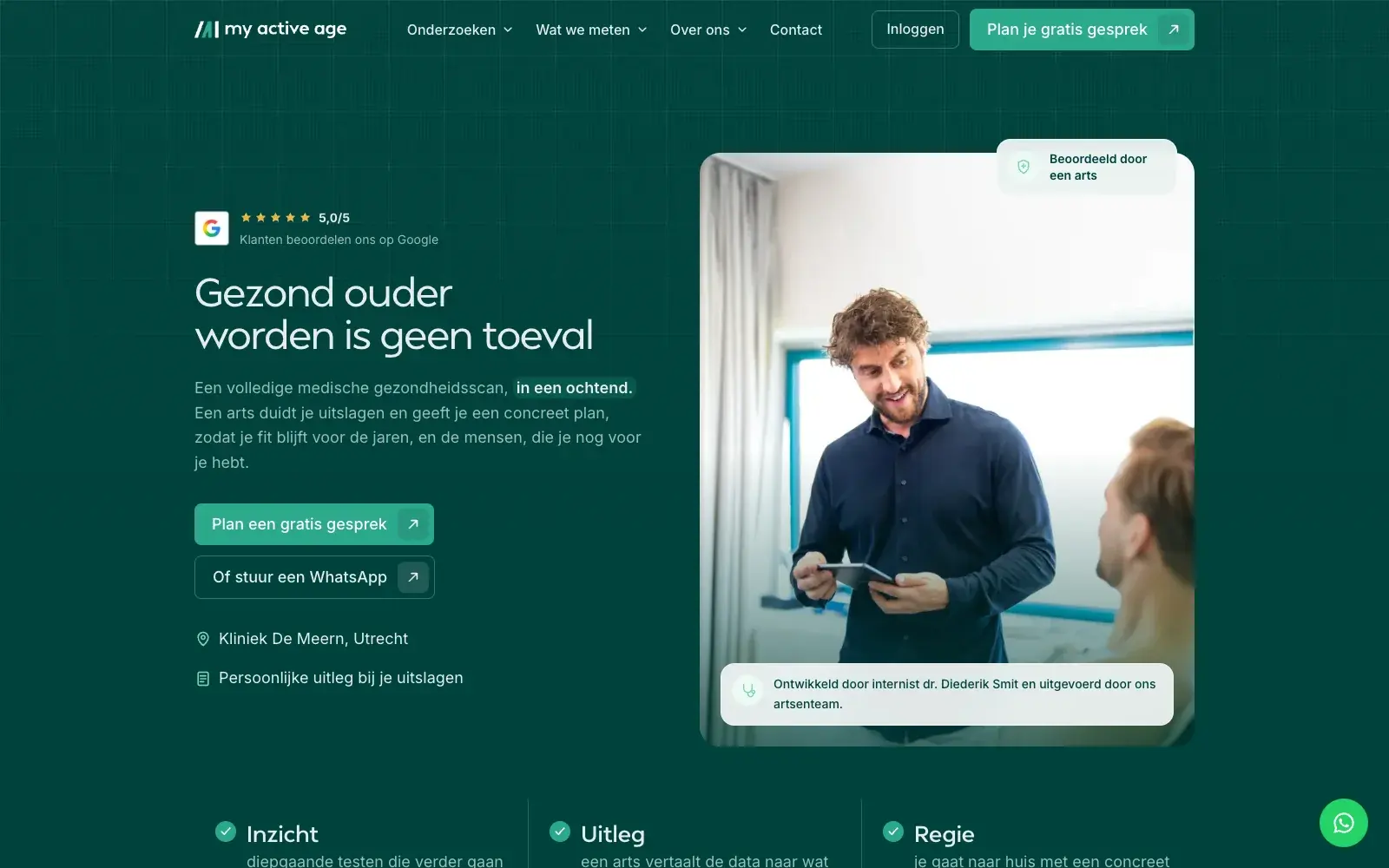
The homepage. One promise, and the doctor who stands behind it. 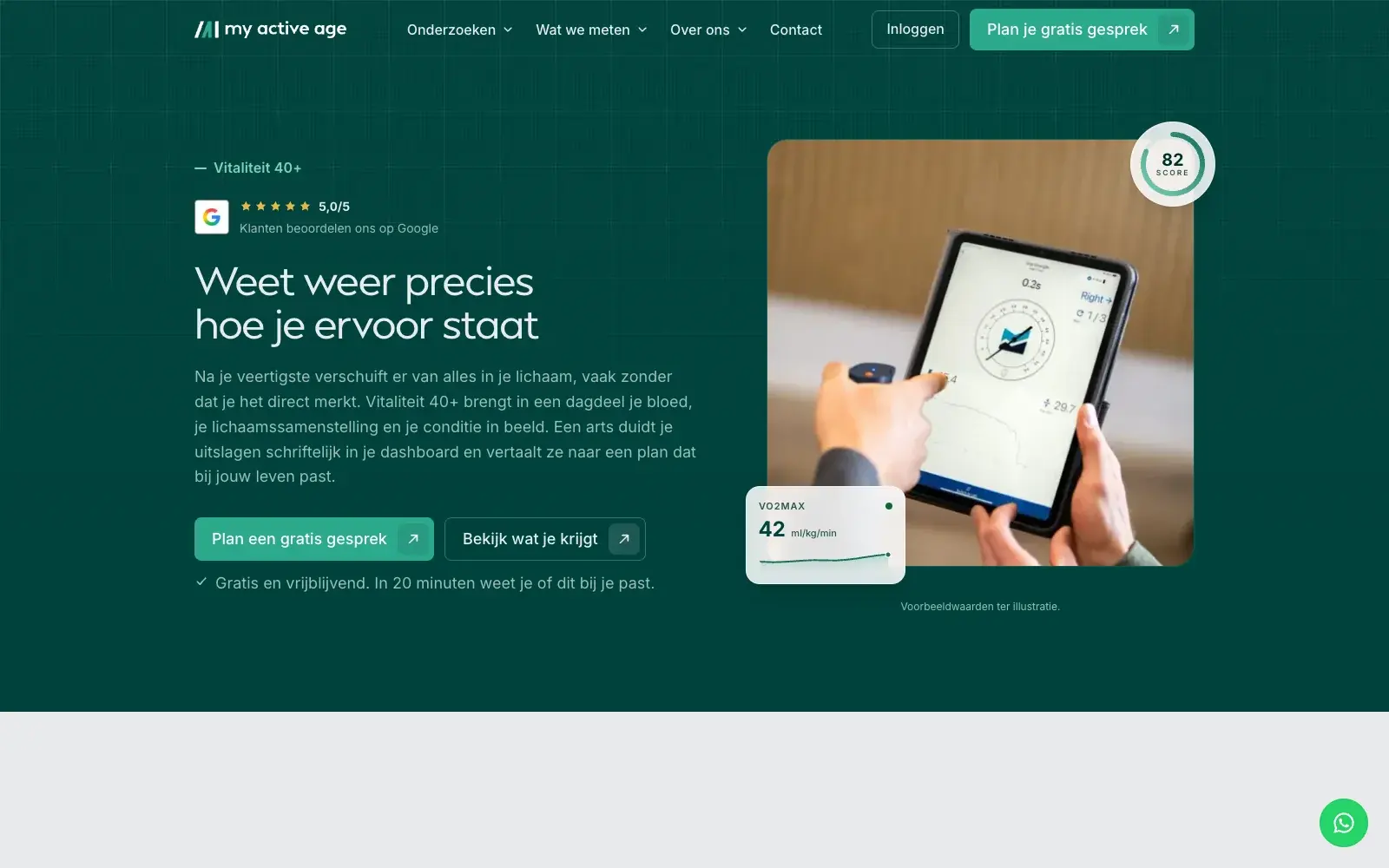
One of nine investigation pages. All nine are the same component and a record. 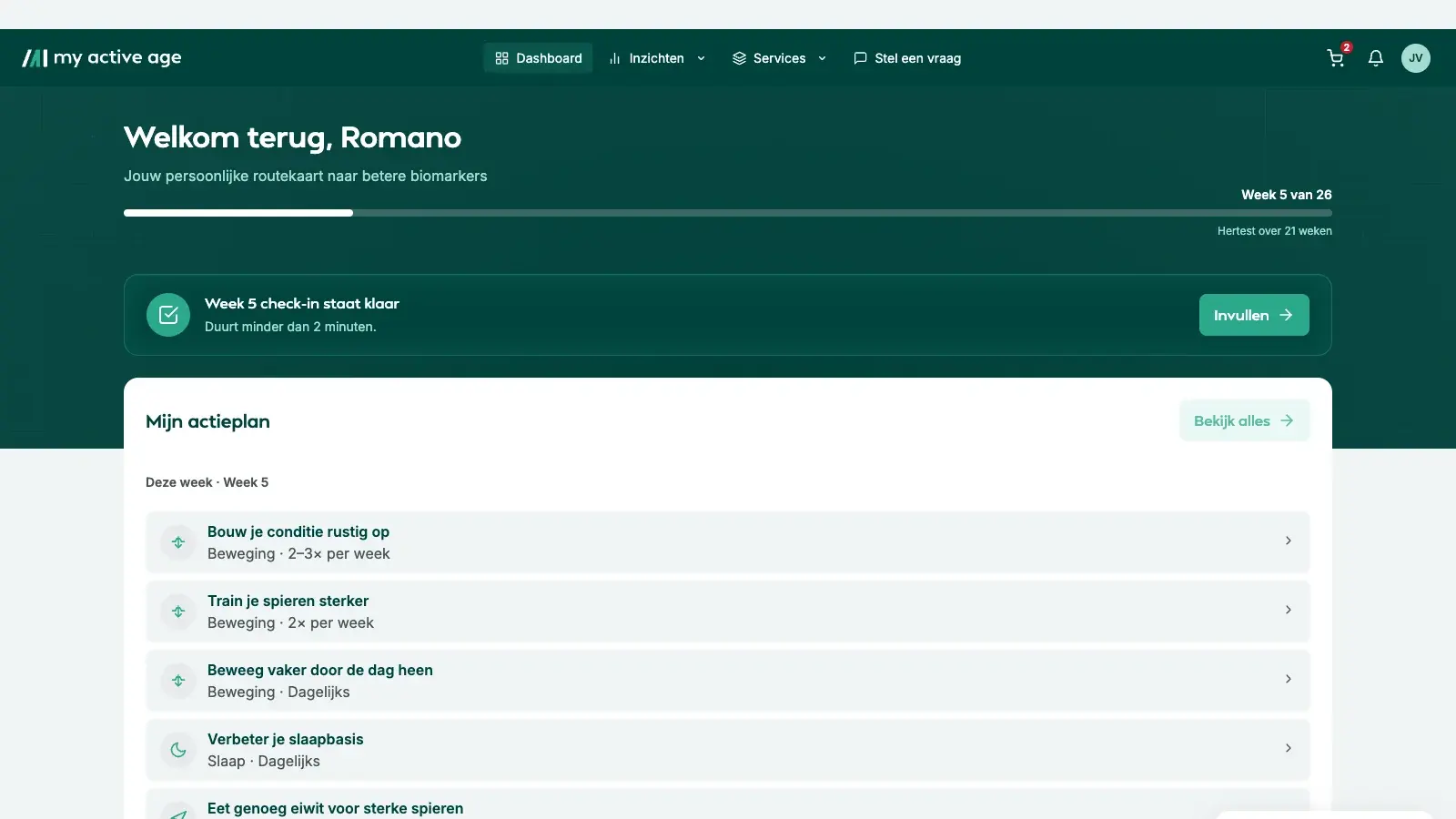
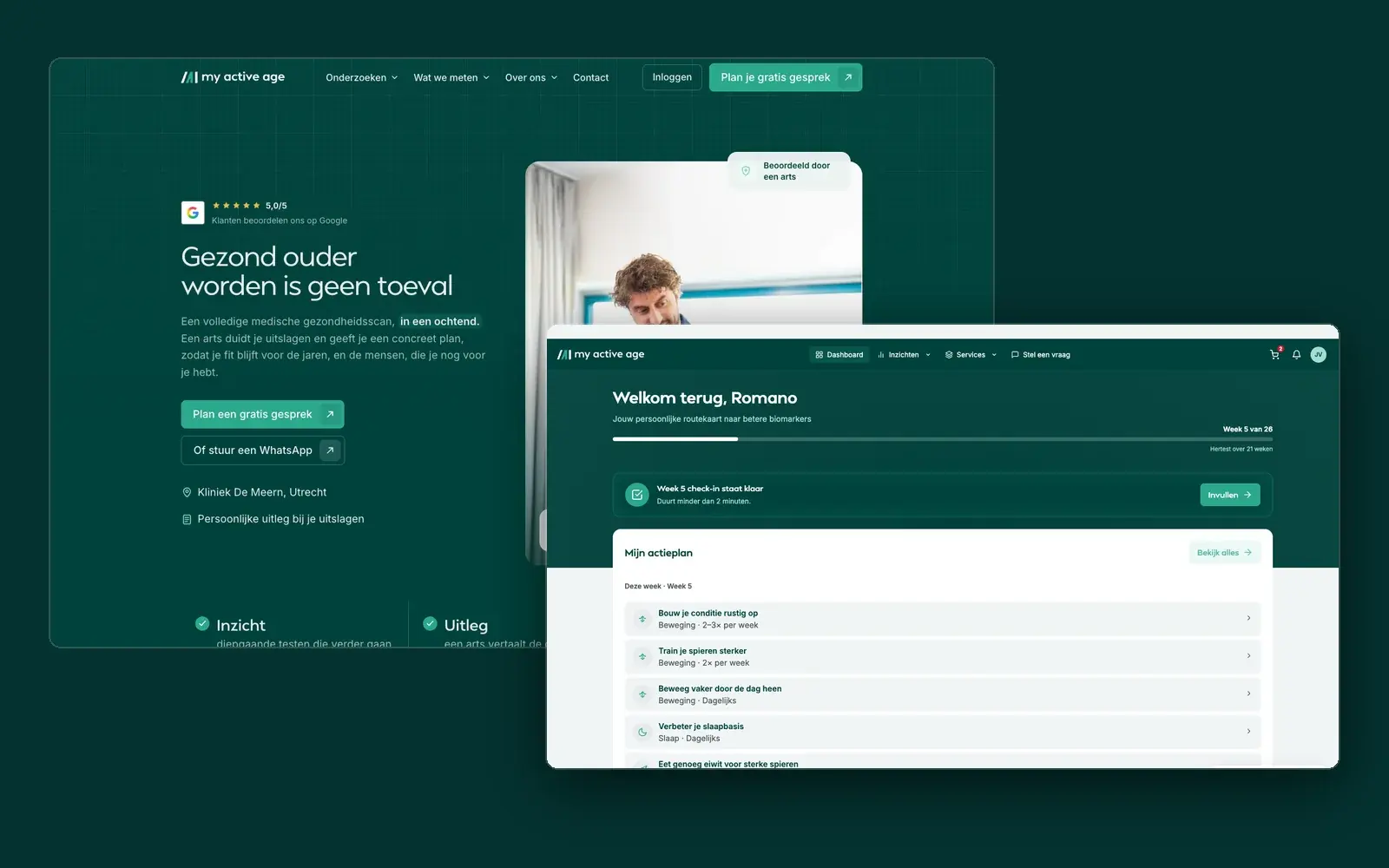
The portal in week five of twenty-six. It shows the phase you are in, not the database. 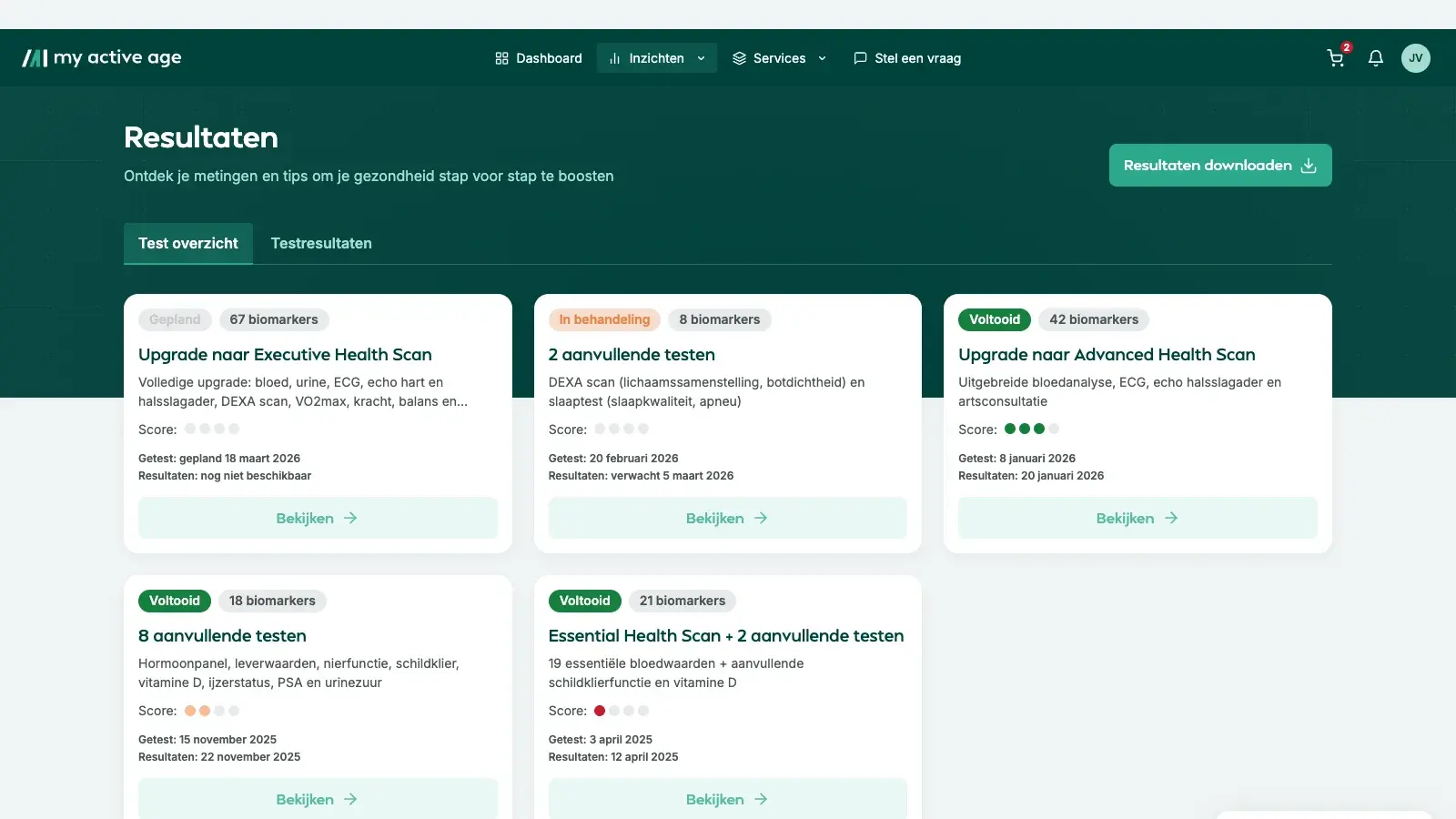
Results, ordered by what needs attention rather than by what was measured. 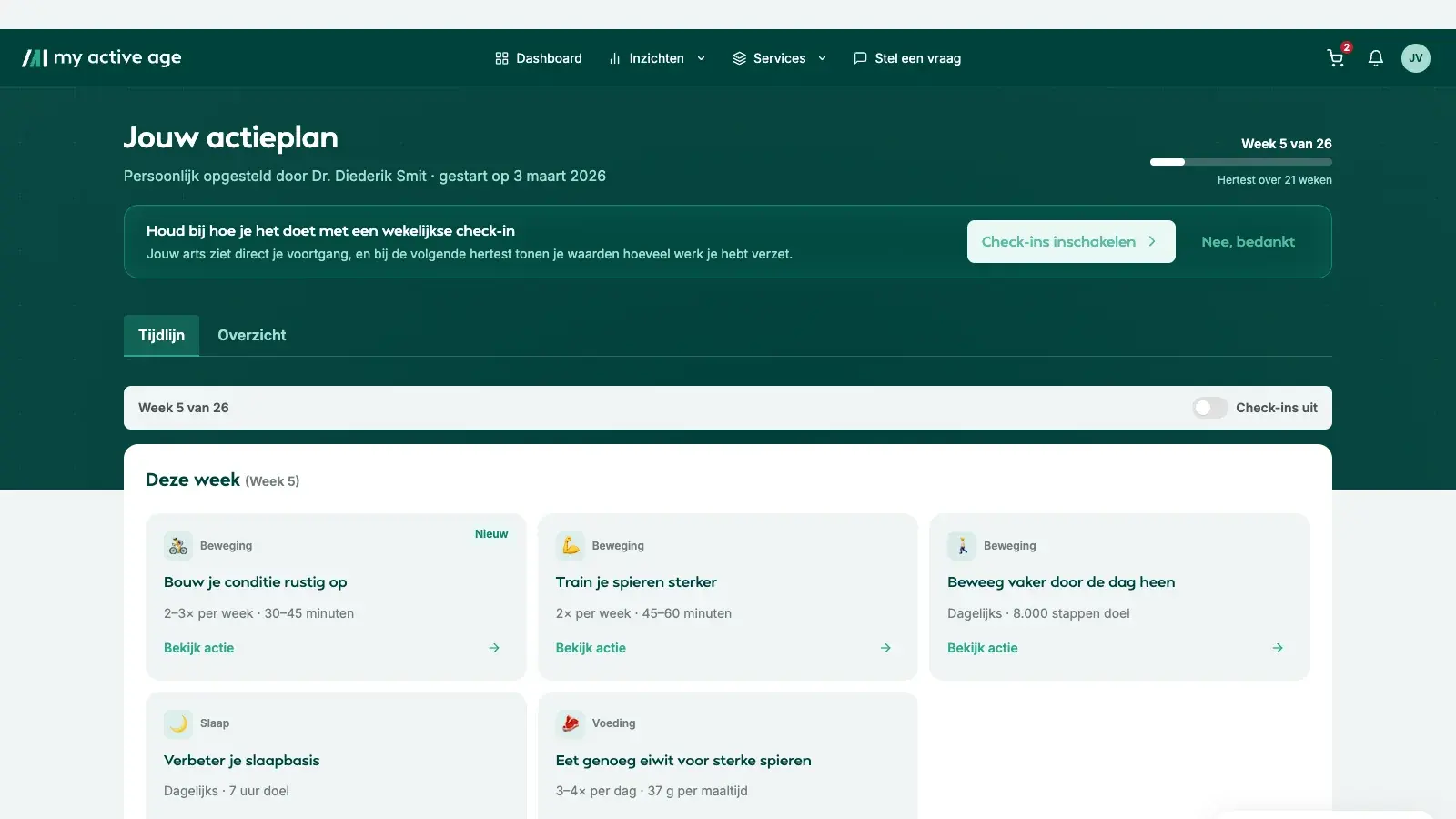
The action plan. What to do this week, in four categories. 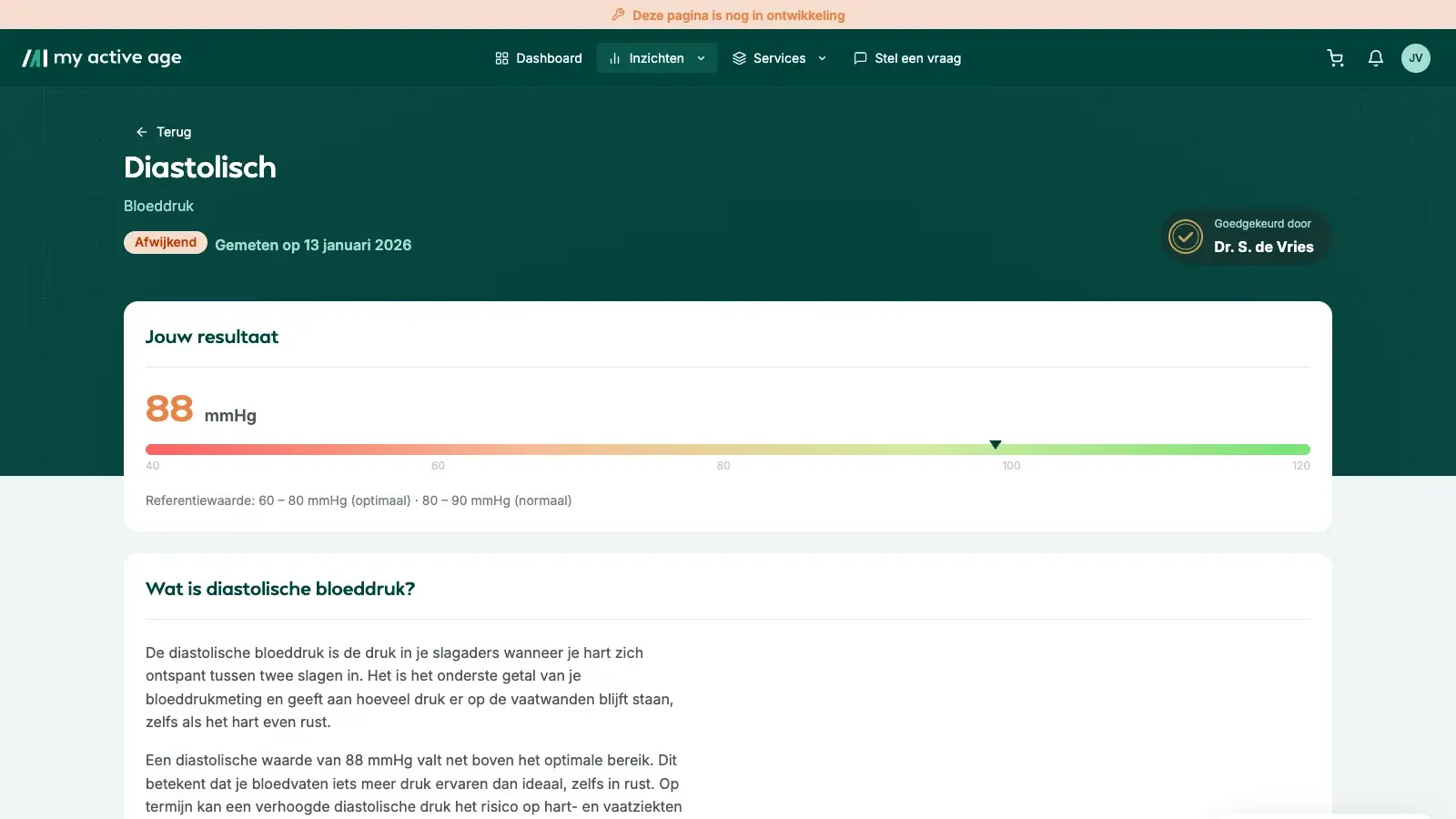
One biomarker, opened. What it is, where you sit, what moves it. 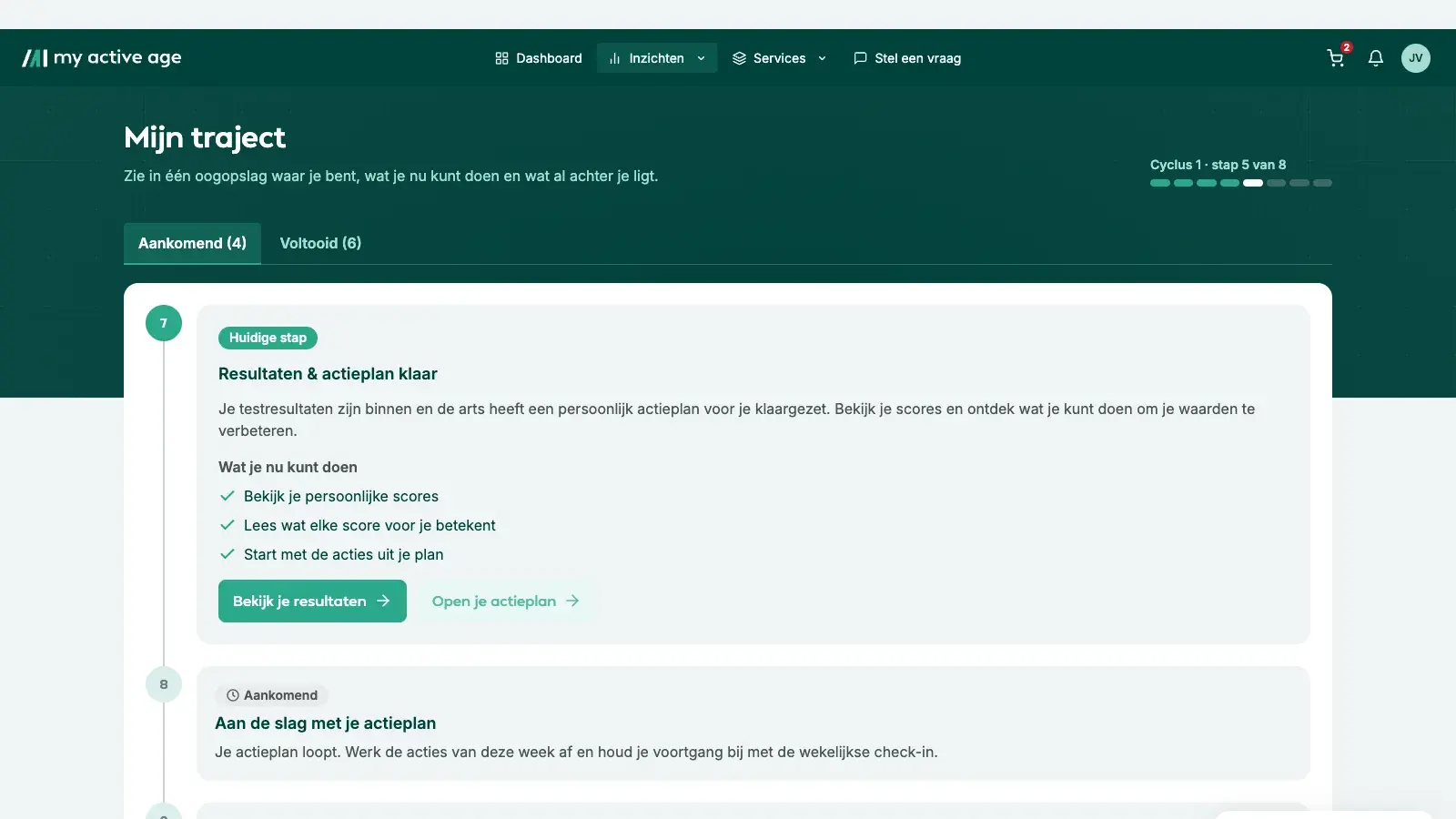
Where you are in the programme, in one line and three cards. 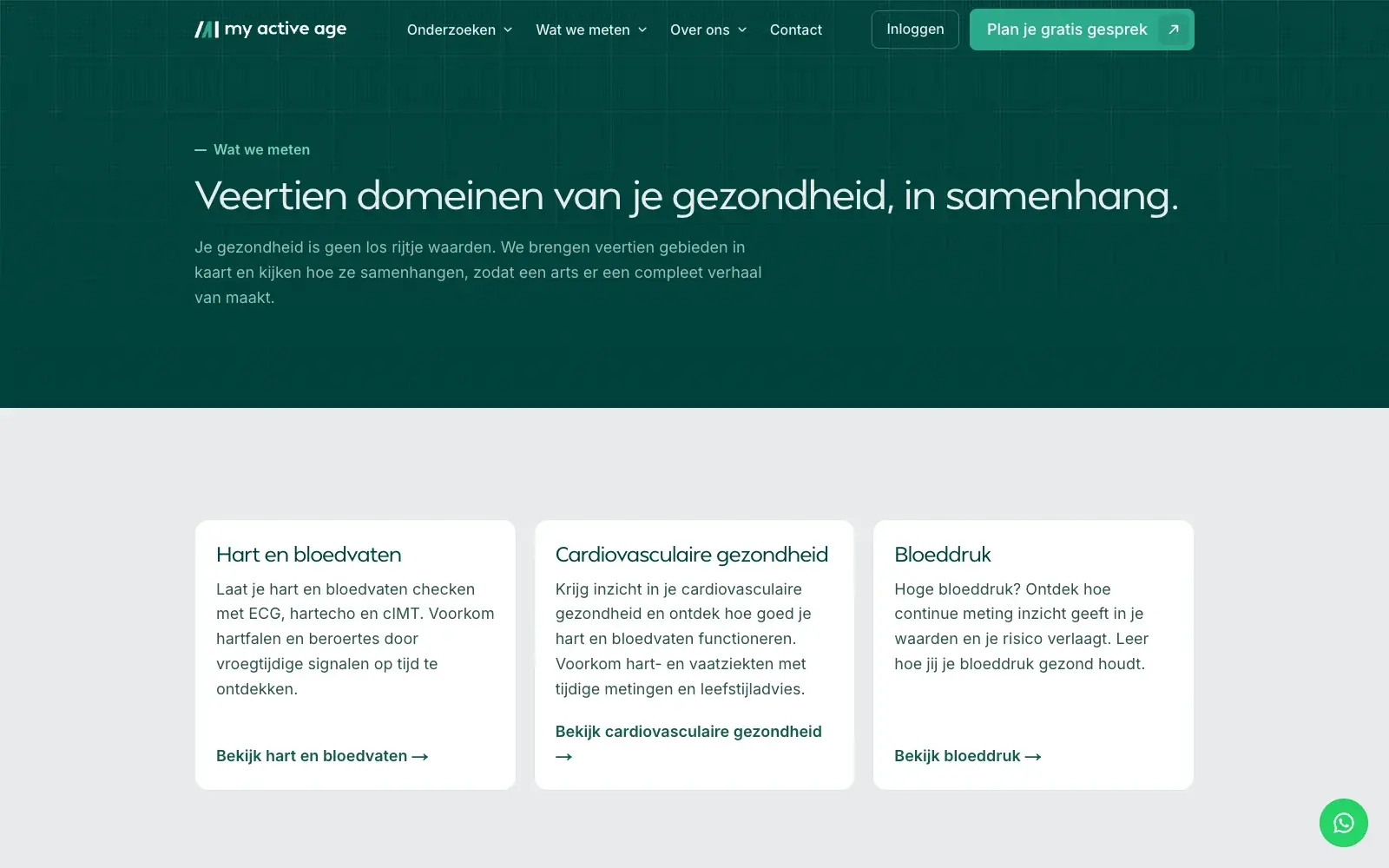
Fourteen health domains, each a structured record rather than a page somebody wrote. 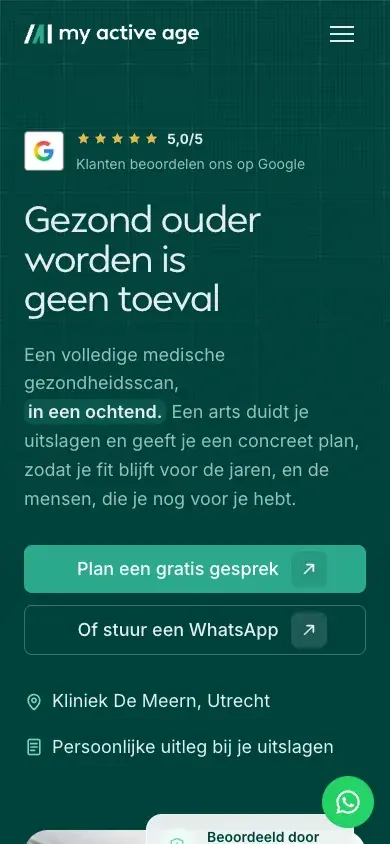
The same promise on a phone, which is where most people meet it first.
1 / 9
Next case
Robidus
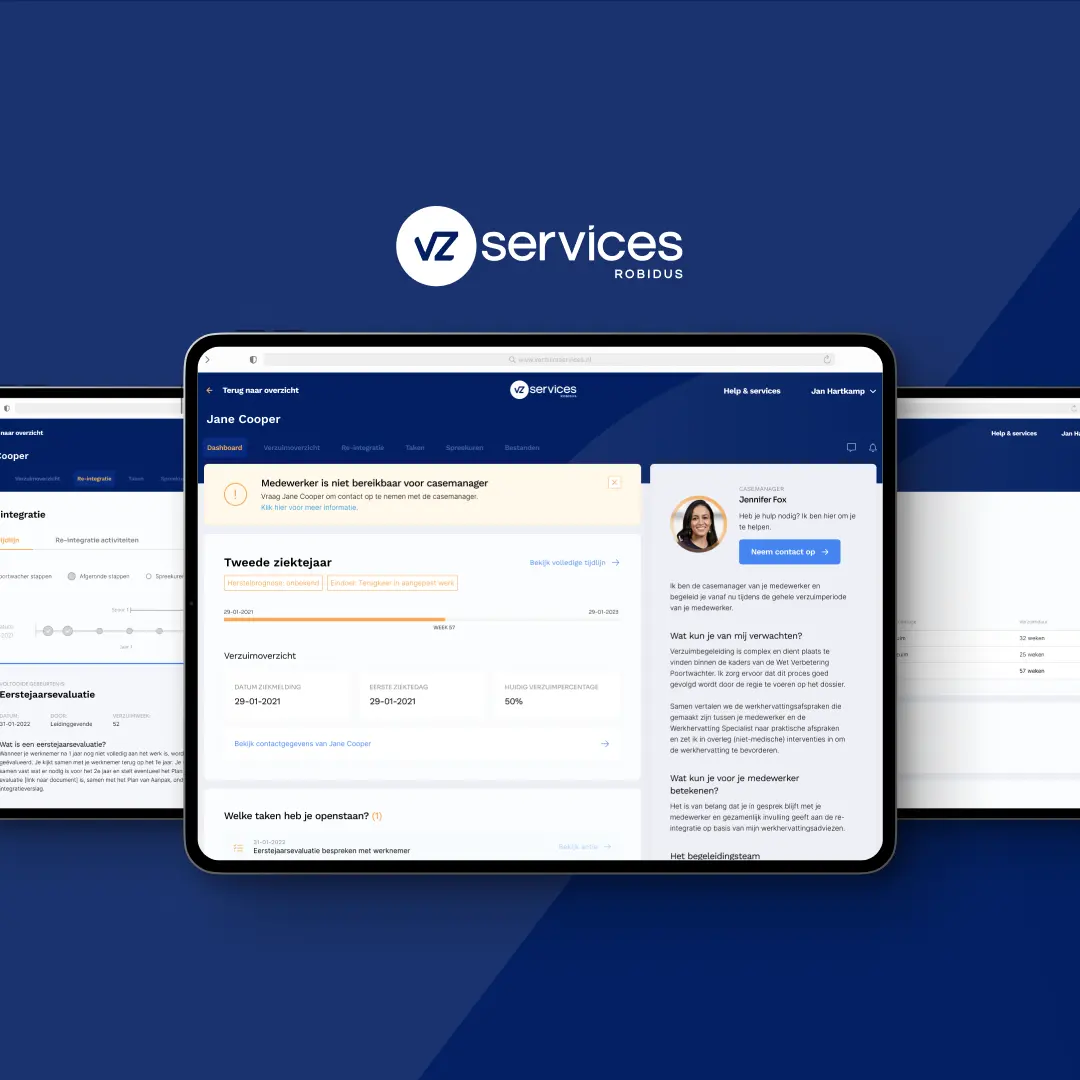
One ecosystem for 600 employers and 350 case managers, replacing the fragmented tools running the Netherlands' largest social-security operation.